Distributed Tracing
Concept
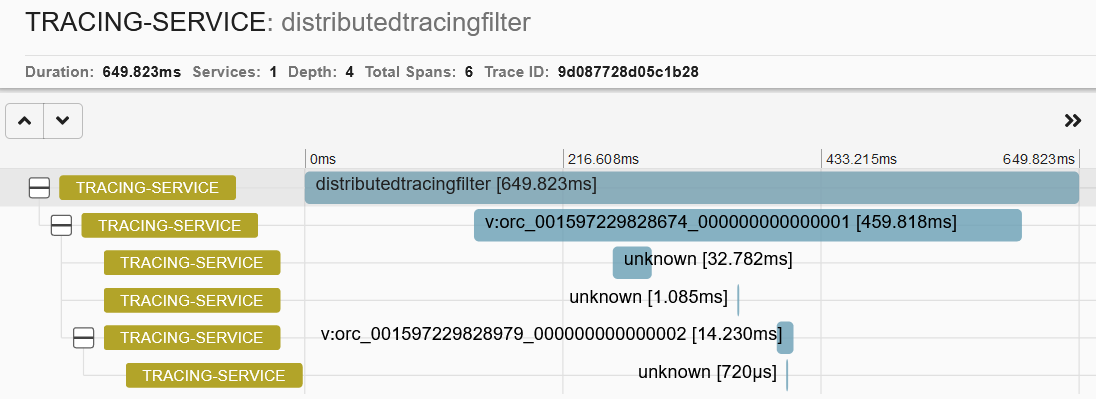
Distributed tracing enables the observation of orchestration processes and service calls at an endpoint through tracing spans. A trace consists of a collection of spans that share the same tracing ID. Spans capture the latency, duration, and remote context of an operation.
SOAP and REST services, along with Orchestra clients, support distributed tracing by receiving (HTTP inbound) or propagating (HTTP outbound) trace information when available. Additionally, the provision of tracing information for received JMS messages is supported.
Settings
To view the traced spans, the Zipkin server must be downloaded and started. For instructions on how to download and start the Zipkin server, refer to this page. After starting the server, ensure that the endpoint is accessible. This endpoint allows for browsing and searching the created tracing spans.
The server address must be specified in the Environment settings under the tracing.address parameter.
To enable distributed tracing, set the tracing.enabled parameter in the Environment settings to true.
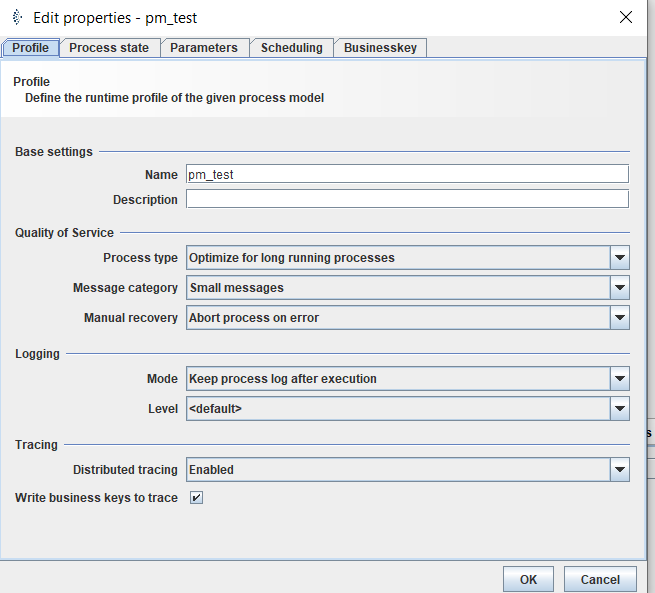
To receive and provide tracing, set the Distributed Tracing property in the process settings to enabled.
For annotating business keys in the trace, enable Write business keys to trace.
